How do you take over two million men, along with women and children, with tens of millions of livestock, and use them to lure a powerful army into a death trap?
God has victory over all His enemies, and He did this very thing in the year 2450 B.C.
The story of the Exodus of Israel from Egypt is a story of redemption and freedom from slavery. But before that, it is a graphic demonstration of God having victory over His enemies.
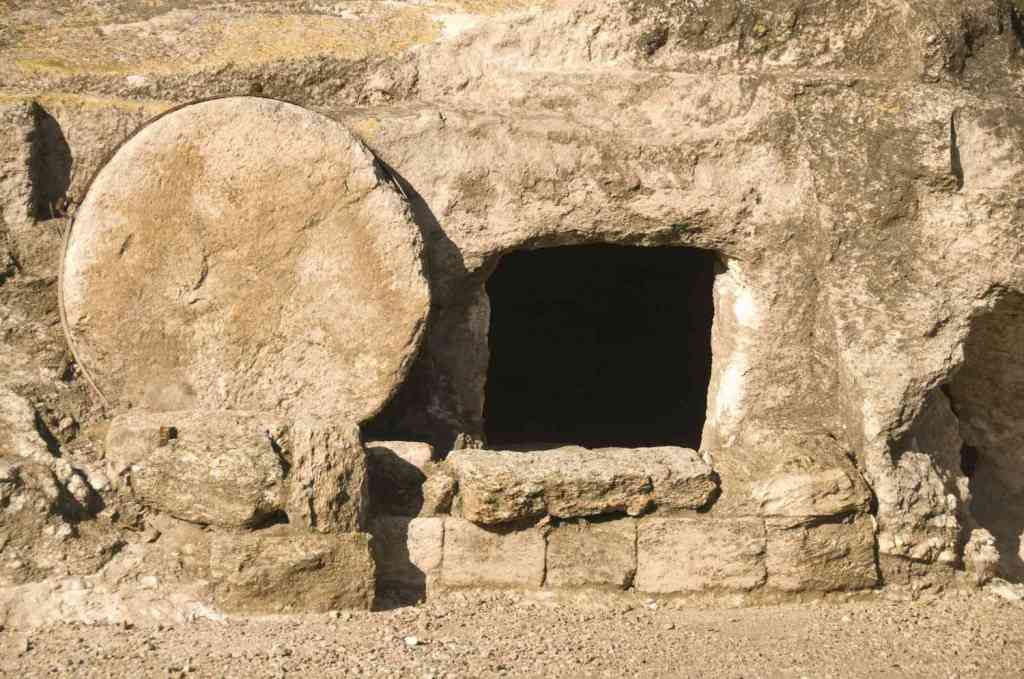
Pharaoh Merenre Antyemsaph II, the very short-reigning Egyptian Pharaoh of the Exodus, gives much evidence of the pride in his heart throughout the narrative of the plagues. Repeatedly he demonstrates his stubborn, willful defiance against the God of Israel, and against His representatives, Moses and Aaron. Nowhere is this more clearly spelled out than when this Pharaoh stated,
Who is the LORD, that I should obey his voice and let Israel go? I do not know the LORD…
Exodus 5:2
He certainly ended up with quite an introduction.
Through the terrible plagues, this Pharaoh was given every opportunity to repent, submit to the will of Israel’s God, and allow God’s people to leave Egypt. Over and over again he refused. But unbeknownst to Moses and the Israelites, God was going to use this proud and stubborn man and his powerful army as a lesson that Israel would never forget.
You probably know the story of the “Red (or Reed) Sea Crossing,” but you may not know it as well as you think. Only in having a proper understanding of the account, realized by correct biblical chronology, archaeological finds such as pottery, and modern technology such as Google maps, can we fully appreciate what God was doing. We obtain more of an understanding of God.
Crossing the Sea Was Not on the Way
It is a misunderstanding of the account to think that Israel had to cross the waters of the Red/Reed Sea to get away from the Egyptian army. When Pharaoh did finally let the people leave Egypt, God led this mass of people and livestock up the North Sinai road, right to the doorstep of Canaan at Etham. Then, as God often does, He had Moses lead the people in a completely unexpected way. The archaeology demonstrates this, and allows the text to make more sense.
Tell the sons of Israel to turn back and camp before Pi-hahiroth, between Migdol and the sea; you shall camp in front of Baal-zephon, opposite it, by the sea.
Exodus 14:2
Once it is understood where places like Etham, Pi-hahiroth, and Baal-zephon are located, the story opens up in a whole new way. Looking at the vicinity on Google maps, it is clear that when God said, “Tell the sons of Israel to turn back…” He meant literally to turn back—to make a u-turn and go back the way they came—back toward Egypt.
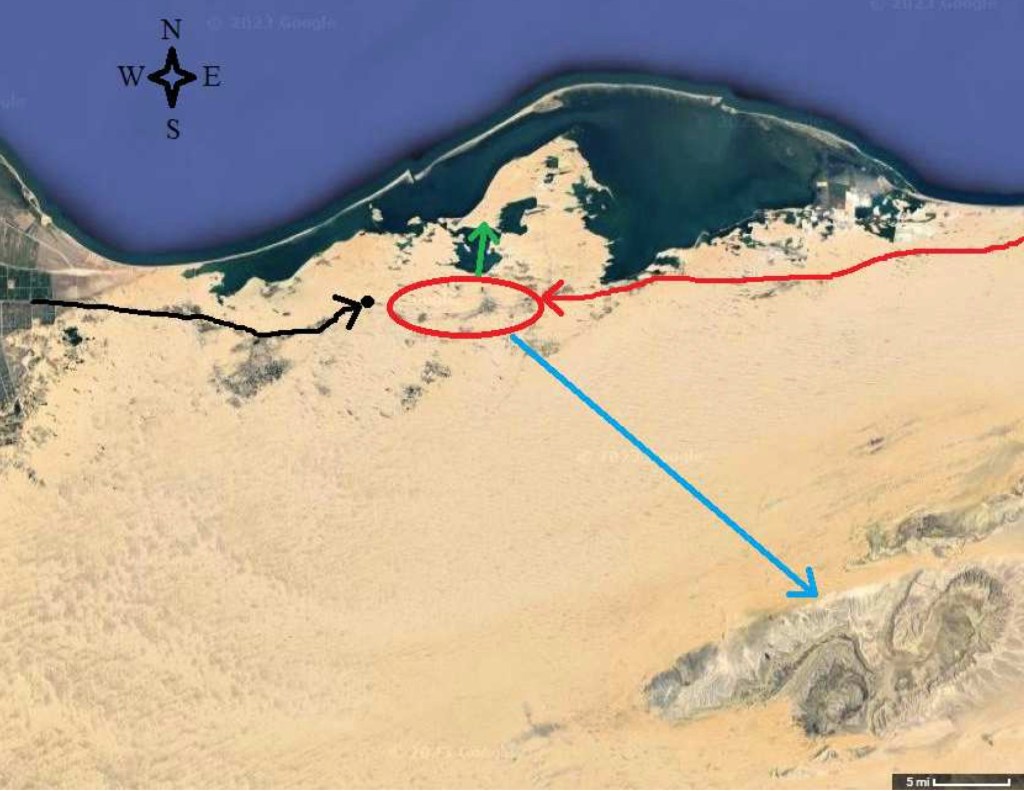
I imagine the multitude of people were completely confused. Why in the world was Moses giving orders to take them back toward Egypt? They had travelled all this way, and were on the threshold of Canaan, the Promised Land. It’s no wonder Pharaoh and his men would have thought,
They are wandering aimlessly in the land; the wilderness has shut them in.
Exodus 14:3
Now, here is another unexpected turn of events. When the congregation finally arrived back at Pi-hahiroth, in the region of what is today called the Ar Ruwaj lagoon in Egypt, Moses did what God told him. He had the congregation face opposite Baal-zephon, which would have been facing north… directly toward the lagoon, the Bardawil Lake, and the Mediterranean Sea!
To put this in perspective, this would be like being chased by an intruder through a house, and instead of heading toward a door or a window, you turn and face a wall. There is nowhere to go in this direction. All the ways of escape are elsewhere.
Again, I can imagine the people really starting to question the sanity of the upper management of this operation.
What we can now see, but the Israelites could not yet understand, was that God’s ultimate purpose for this present series of events was not a quick escape route into the Promised Land. God is setting a death trap for His enemy. He is going to deal a blow to the proud that will never be forgotten.
The Trap is Baited
The biblical account tells us that as the congregation faced the water, a mighty east wind blew across the hot desert through the night, pushing the waters of the miles wide Ar Ruwaj lagoon over to the west, creating a dried up path, at least a mile wide, through the lagoon basin. While the waters were heaped up to the west, the congregation all safely went through on dry ground. (See the green arrow on the map above.)
Then this Pharaoh, in the pride of his heart, with the people apparently trapped on the other side of the lagoon (on a giant land bridge between the lagoon and the Mediterranean Sea), chose to take his army and pursue them. If the slaves could do it, so could he and his army. He would follow the same way he had just watched Israel pass through, and would round up his slaves, bringing them back to Egypt.
Think of the noise of the wind as it continuously blew, keeping the waters heaped up on the western side of the lagoon; the noise of the millions of people and their livestock; the noise of the Egyptian horses and chariots.
And then, as the Egyptians were halfway through the bowl of the lagoon, the account tells us that the Lord clogged their chariot wheels and they were thrown into a panic. They began to realize they had been trapped.
Let us flee from before Israel, for the LORD fights for them against the Egyptians.
Exodus 14:25
But it was too late. As they began the attempt to turn back and retreat, think of the sudden eerie silence, as the wind all at once ceased blowing.
And then, the sound of madly rushing water.
The waters would have swept back south east, back the way they had come, and as the Egyptians turned to race back out of the lagoon, they would have met the waters head on, just as the verse states.
So Moses stretched out his hand over the sea, and the sea returned to its normal state at daybreak, while the Egyptians were fleeing right into it;
Exodus 14:27
This was no small path in the sea with water lapping on each side. This was a tsunami rushing in and over these men, with their horses and chariots.
Israel watched the Lord defeat their enemies that day. And they never forgot it.
Thus the LORD saved Israel that day from the hand of the Egyptians, and Israel saw the Egyptians dead on the seashore.
Exodus 14:30
This event comes up many times throughout the Old Testament, and is still celebrated today during Passover and Seder celebrations. Though they did not understand what God was doing, and though it looked like all was about to end in a horrible tragedy for Israel, God was actually setting a massive death trap for the enemy.
The Greater Victory to Come
The entire account of the Exodus points to the greater event that was to take place thousands of years later when the Messiah would come. When Jesus hung on the cross, bleeding and dying, it looked like all had ended in horrible tragedy. This one who saved others now seemingly could not save Himself.
But the whole point and purpose was not to save Himself from the agony of the cross. God was accomplishing the greatest of victories, victory over sin and death. But victory also over the enemy. When Jesus got up and walked out of the tomb on Easter Sunday morning, He dealt a death blow to the Devil’s head. The Bible says,
…having been buried with Him in baptism, in which you were also raised up with Him through faith in the working of God, who raised Him (Jesus) from the dead. When you were dead in your transgressions and the uncircumcision of your flesh, He made you alive together with Him, having forgiven us all our transgressions, having canceled out the certificate of debt consisting of decrees against us, which was hostile to us; and He has taken it out of the way, having nailed it to the cross. When He had disarmed the rulers and authorities, He made a public display of them, having triumphed over them through Him.
Colossians 2:12-15
Other Bible versions use the term “principalities and powers” instead of “rulers and authorities,” this most likely referring to ranks of fallen evil spirits which had usurped dominion over the world.
Then just before He went to the cross, Jesus said,
Now is the judgment of this world; now will the ruler of this world be cast out. And I, when I am lifted up from the earth, will draw all people to myself.
John 12:31
Just like the account of Pharaoh and the Red/Reed Sea, the crucifixion and resurrection of Jesus was a death trap for the great enemy of God. When all looked hopeless and doomed, God suddenly defeated the foe and won a great victory.
These things surely teach us some important lessons about God. So often His greatest victories come at what appear to be the most hopeless of times. Be encouraged saints of God. Stand faithful and strong at the waters before you, no matter the opposition. And remember the words of Moses,
Fear not, stand firm, and see the salvation of the LORD, which he will work for you today. For the Egyptians whom you see today, you shall never see again. The LORD will fight for you, and you have only to be silent.
Exodus 14:13-14
🎙️ Jennifer and I recorded a podcast on this topic which can be accessed here.

Get new posts by email
Discover more from Steve Hall
Subscribe to get the latest posts sent to your email.
 Steve Hall